


Current
See you in future / Never met before
Stephen Wong Chun Hei
Mar 6 (Fri.) - Apr 11 (Sat.), 2026
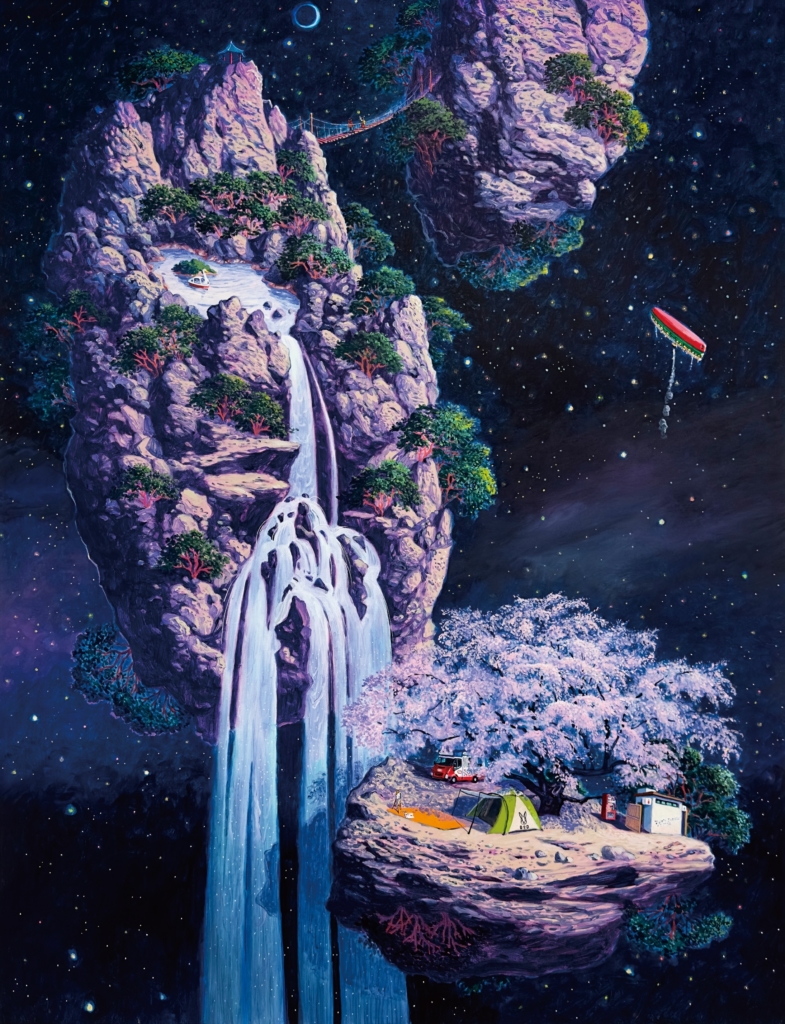
Stephen Wong Chun Hei / The Space Sakura with the Infinity Falls / 130 × 100 cm / Acrylic on canvas
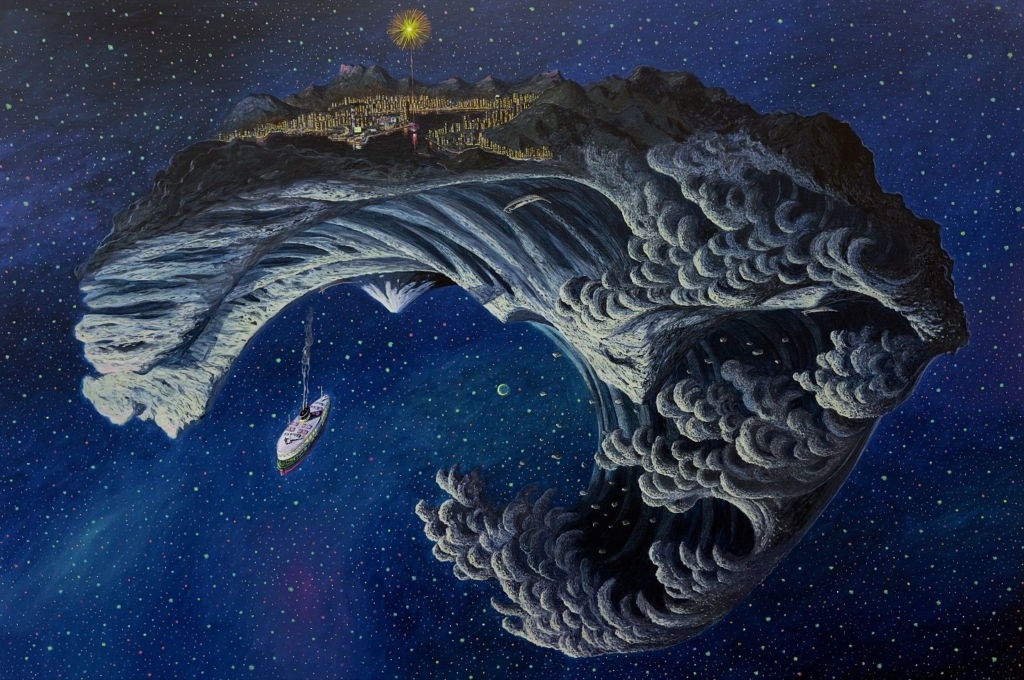
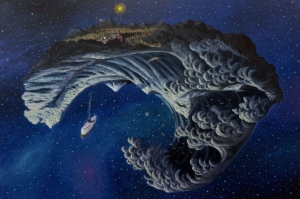
Stephen Wong Chun Hei / The Rocky Wave and The Galaxy Fireworks / 100 × 150 cm / Acrylic on canvas
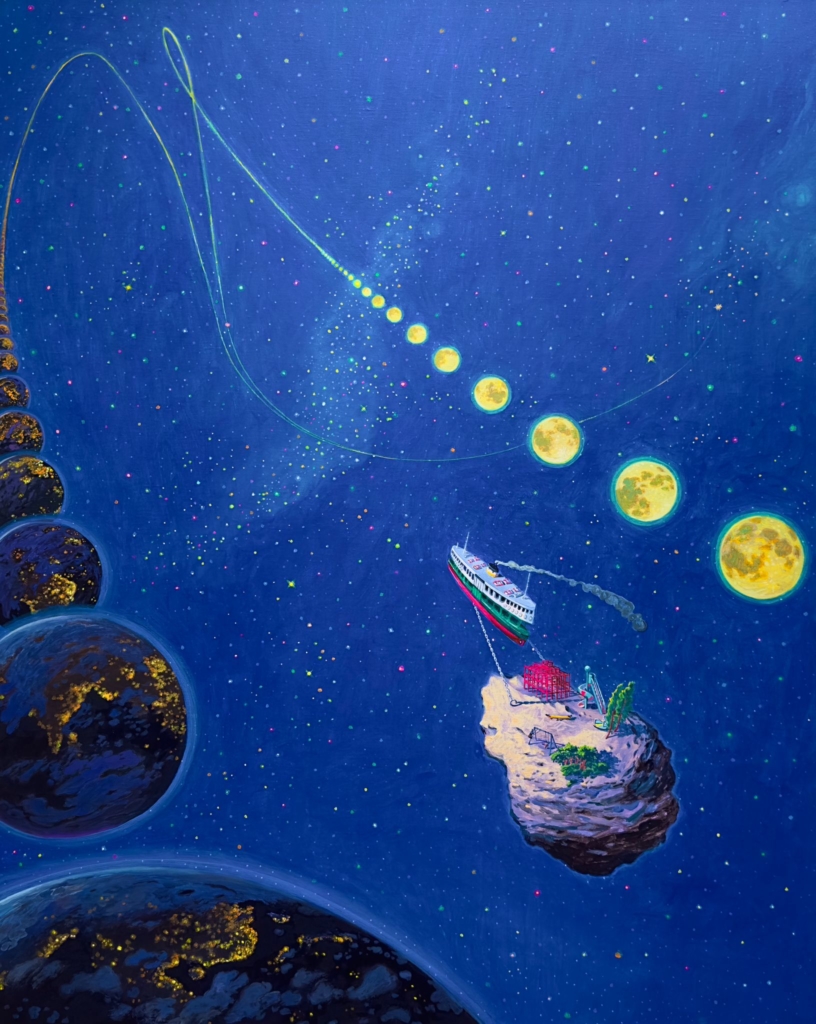
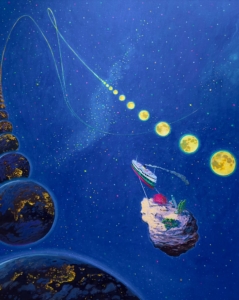
Stephen Wong Chun Hei / Along the Path of the Full Moon / 100 × 80 cm / Acrylic on canvas
MAHO KUBOTA GALLERY is pleased to present a solo exhibition by Hong Kong–based artist Stephen Wong Chun Hei, opening on March 6, 2026. Entitled See you in future / Never met before, the exhibition will feature eleven new paintings, including the artist’s first work created in a folding-screen format.
Stephen Wong Chun Hei has built a strong reputation, centered in Hong Kong and extending across the Asian art scene, and is widely celebrated for his evocative paintings of Hong Kong landscapes, expressed through a distinctive artistic language uniquely his own. When one thinks of Hong Kong scenery, images of a dazzling international metropolis often come to mind—rows of skyscrapers clustered in districts such as Wan Chai and Central. Yet Wong does not depict this stereotypical vision of the city. Instead, he paints a Hong Kong that is more immediate and deeply personal—a landscape physically etched into his memory. The islands scattered across the shimmering southern sea, the undulating mountain ranges, and the lush greenery that unfold beneath us as we descend by airplane—these are the primordial landscapes that have endured since before modernization, and they are vividly reflected in his paintings. Within these scenes appear familiar motifs such as real buildings, scenic landmarks, and the Star Ferry, allowing viewers from Hong Kong to recognize these places and project their own memories onto the works.
This exhibition marks Wong’s first solo show in Tokyo.¹ In the new works presented here, his expression becomes even more liberated, stepping into a world released from the constraints of gravity. Perspectives that begin in the landscapes of Hong Kong and Japan gradually open outward into the cosmos. The scenes floating in the deep blue darkness of space are rooted in places the artist has actually visited, yet are reconstructed through a rich and expansive imagination. Within this perspective, one can discern the tradition of Chinese shanshui (mountain-and-water) painting. Shanshui painting is not merely a depiction of scenery; rather, it approaches inner landscapes through the representation of nature, inviting viewers on an introspective journey. It is imbued with philosophical reflection and free-spirited thought born from the experience of wandering among mountains and rivers.
In Wong’s paintings, viewers are likewise welcomed into these worlds with ease. Our gaze moves freely among mountains and waters, traversing the multiple stages of perspective characteristic of the Eastern pictorial method known as the “Three Distances,” drifting and playing as if released from gravity itself. In the new work The Space Sakura with the Infinity Falls, this shanshui-like worldview becomes especially apparent, lending the entire composition a sense of cosmic buoyancy and boundless spatiality. Meanwhile, The Rocky Wave and The Galaxy Fireworks, an homage to Hokusai’s The Great Wave off Kanagawa, transforms waves into dynamic rocky mountains, placing Mount Fuji and the night view of Hong Kong’s Victoria Harbour back to back. In Along the Path of the Full Moon, a Star Ferry gently advances along a route connecting Earth and Moon, towing a rocky island bearing a small children’s park. In each of these works, the universe depicted is not a distant unknown realm, but a space that expands gracefully and freely while maintaining a tangible connection to reality.
As these works demonstrate, Wong’s interest lies not in the realistic reproduction of scenery. In his artistic practice, he diverges from many contemporary painters by never working from photographs. Instead, he engages in urban and mountain hikes, sketchbook in hand, experiencing each place through his own perspective as he draws on site. The sensations gathered through the five senses mature as they move from sketch to canvas, expanding into imaginative visions grounded in lived experience. Wong observes the world around him from a bird’s-eye view, introducing a spirit of “play,” and through leaps of imagination that verge on the supernatural, unfolds a realm of free and vibrant imagery. Familiar motifs are liberated from the laws and constraints of reality, functioning as lighthearted devices within new and open relationships, and inviting viewers into the painting. There, viewers themselves become part of the world, able to wander freely and expand their imagination. It is precisely these wings of imagination that constitute the unique appeal of Wong’s art.
Having grown up immersed in Japanese culture through anime and video games, Wong’s perspective also reveals the archetypal narrative of an innocent being who gains a richer world through adventure and challenge. Like the train in Kenji Miyazawa’s Night on the Galactic Railroad, we are invited to board a Star Ferry drifting through a weightless expanse connected to the glittering Milky Way, embarking on an endless journey amid countless sparkling stars.
¹ In 2024 he presented a solo-presentation booth at the art fair TOKYO GENDAI at Pacifico Yokohama, featuring works centered on Japanese landscapes.